Posts

Overworked in the ER?

Are you overworked? Working double 12 hour shifts? COVID got you working 2 years of overtime? What are you doing, or your unit, to ensure nurses and doctors are well rested and prepared for their shifts? Or what could be done to improve work place conditions? Looking to hear from those who've tried some new things and have found success (or failures)

Burnout - From the ER and Beyond, Healthcare Workers at Risk

The global pandemic, which still continues, has forced many healthcare professionals including nurses to work under the constant and unrelenting pressures of overtime and patient loss. That conicides with a work culture and system that often works to undermine alleviating workload for frontline healthcare professionals. The brunt of this reality is held by nurses working amidst the effects of COVID, be it directly with patients, or the spillover from understaffed departments. Burnout is not only real, it's increasing. Nursing, and healthcare professionals, know that their job is fast-paced, sometimes at break neck speed, role that demands significant focus and investment in all ways. That level of service provision dminishes with constant pressures to offer quality care unders stress prolonged over months to years (as is the pandemic reality). This includes mental and physical weight that can have adverse effects on the profession, but most importantly on individual health. W...

Just In: ER Nurses Aren't Robots

It would appear that although ER nurses perform their duties seamlessly despite dealing with critical injuries in patients, this type of high level stress has impacts beyond the ER. A Master of Nursing student from the University of Calgary suggests that the work environment is not only stressful, but could have devastating consequences. Your thoughts on the short and long term damage on nurses in the ER?

Overcrowding and Resourcing in The ER

How many of you care for patients in the ER who shouldn't really be there? At worst we're talking about psychiatric patients who sit in the ER and pose a physical threat to nurses. At best it is a drain on resources and impacts overall healthcare for those who really need it. Appropriate protocols and policies to streamline healthcare provision and ensure the right care is given to the needs of the patient are paramount elements to efficiency. When someone doesn't need to be an ER, or someone we should be transferred to another unit that can better provide for their needs isn't, everybody suffers. The issue can also lead to poor delivery of healthcare to patients who are in the wrong ward. And also as an added stress to the nurses who need to pay attention to patients maybe outside of their particular expertise. What protocols or policies do you have in place to mitigate? Or is this just part of delivering effective healthcare to all? Does it look different in for prof...

Nursing Pragmatics: Your Shoes of Preference?

There was a time when nursing shoes were a distinct white flat. Before that, a distinct white mid-low heels. Crocs may be comfortable but who wants an open toe anyways? What shoe do you use at work? The popular choice is of course the day long sneaker. The choice of footwear is important since you're on your feet all day (plus it saves your back). Choices? Styles? Price points? What's your preference. One thing that's evident, if you can swing it try to get some more info on your feet. Even if it's the Dr. Scholls machine at the supermarket, knowing you have high, mid, or low arches impacts the shoe you purchase.

Nurses Aren't Interchangeable

In the hardest hit regions of COVID-19, mostly due to bad public health policies, redeployment of nursing staff is one tool to staff ICUs. ER nurses are often the first to moved. But the skills aren't interchangeable. Each discipline has very specific competencies. Care suffers when different disciplines need to extend themselves. Here's another thread on the subject. Nurse redeployment & ICU capacity - LONG thread. Nurses aren't interchangeable. We're highly skilled, educated, evidence-informed professionals. The @canadanurses certifies 22 specialties from premature babies to burns to hospice, though there are almost 100 specialties. — Matthew J Douma (@matthewjdouma) September 26, 2021

Nurses Make Care Happen

As the slow incremental reforms in the American healthcare system amble forward, within the change lies great opportunity. In seeking to avert the collision course of an aging chronically ill population with a financial burden to maintain the current system, policy makers have had to reflect and discover a hitherto unrealized fact: nurses are the backbone of the health care system. This is both by virtue of their numbers and diversified involvement in caring for patients. With informatics being mandated into the health care system the nursing profession is in an ideal position to create a synergy between their work and technology. The Alliance for Nursing Informatics(ANI) is a collaboration of many nursing informatics groups whose goal is to represent with one voice nurse informaticists nationwide. ANI has stated that if health information technology is used in a ‘meaningful way’ along with best practice and evidence based care that health care will improve throughout the nation. In t...

Frontline Healthcare Workers Slowly Getting Vaccine

Let's ignore the minute healthcare practitioners who believe the conspiracy hype that vaccinations aren't to be trusted. The vast majority of frontline healthcare workers are receiving a reprieve, or perhaps just a little hope, with the Moderna and Phizer vaccines. Both require two doses and in most jurisdictions appear to be given to health providers first. That's great news. But the tide hasn't shifted yet. The chaos in our midst won't subside for sometime, especially given the insistance of too many to skirt healthcare regulations and simple mask wearing. Stay safe out there, and hopefully your managemenet is doing their job and getting the right people vaccinated fast.

The Unhealthy Culture of "Above and Beyond"

Is the work of a nurse supposed to be "above and beyond?" COVID has certainly shifted our expectations. There is more work to do as risk and critical care accommodates the massive influx and changes COVID-19 has brought. It means a lot more attention on frontline healthcare providers. Some of the narrative celebrating these workers include acknowledging the work--those who go "above and beyond" the normal work repsonsibilities to serve. But is that what we're after? In times of crisis above and beyond may be normal. Comes with the territory. But the expectation nurses go ABOVE and BEYOND all the time is NOT sustainable. It leads to rapid burnout at best. It makes performing critical care harder as management expectations go up. And you know who are the chief proponents of this unhealthy culture? NURSES! There is a peculiar assumption that nurses should overachieve by nature. That creates an internal culture where doing more than what's required in your j...

finding rhythms, wear your mask, the er is disaster

https://www.thestate.com/news/coronavirus/article243599457.html Have you found rhythm in your daily work routines amidst COVID craziness? You do what you have to do to cope. But note, this is trauma. Inundated ER rooms look like war zones, and with government officials doing little to curb the rapid acceleration of the virus, we can expect it to get worse. This is trauma for healthcare providers. Frontline workers may find rhythm in the chaos today, but bear in mind that it's taking a toll on all of our bodies. Be mindful of the stress and plan for a long recovery when we get to the other side of this. Any mechanism or strategies you've tried to cope with new stress and hazards?

Shot out to the front line

You're safe where you're at and that you're not suffering from shortages of PPE. Frontline healthcare workers are receiving acknowledgement from everyone these days. But we know what it means sit exhausted on the front lines as the world seems to deteriorate inside the hospital. Some of you are on the front lines of a pandemic that doesn't seem to be slowing down. In someplace it's actually picking up. We see you in the struggle and how you put your body on the line. Keep sharing the story that COVID-19 remains dangerous and we should all be on high alert. Keep encouraging people to wear their masks in public. Hopefully we get over this but it's not gonna be soon....

Ya, it's not over, ICUs still overrun

COVID 19 is the worst disease process I’ve ever worked with in my 8 years as an ICU nurse. When they say “recovered” they don’t tell you that that means you may need a lung transplant. Or that you may come back after d/c with a massive heart attack or stroke bc COVID makes — Cherie Antoinette (@sheriantoinette) June 14, 2020 COVID-19 is vicious. This is an ER Nurses blog but we know there's crossover. Many pulled into pandemic response (most in fact). But special shout out to our family in the ICU!

Wear your masks in public

I can't imagine how many grown men and women still refuse to wear masks in public? It's a matter of public health. Part of me wonders whether or not it has to do with grown white men unwilling to do something that might benefit other people. After all mask wearing is predominantly for others as it doesn't have as big of an impact on YOU. It stops YOUR droplets from heading out into the world. So who cares if your ugly mug is covered, show some respect. Keep on pushing the normalization of mask wearing in public because it doesn't seem like we're gonna be out of the woods anytime soon. Stay safe out there.

Trump's Lack of Leadership Crippling Response.

You know things are bad when the federal response is completely missing, and you have to blame state governors for the mess. Stay safe out there. Your work is crazy. it's ok to feel the grief and anxiety of this time. Other countries responded quickly and aggressively to combat the spread of coronavirus. Trump failed to do the same—and now the U.S. has the most cases in the world. pic.twitter.com/JpYn0okt2j — CAP Action (@CAPAction) April 9, 2020

COVID Stats Around the World

The results aren't good for America. Something failed in the healthcare system. Here are some resources in terms of tracking COVID trends. »  COVID-19 tracking map »  COVID-19 tracking map FAQ »  CEPAR COVID-19 Preparedness and Response Plan https://www.worldometers.info/coronavirus/#countries

It's not PTSD...yet

How are you feeling with the advent of COVID? We're just getting started and nurses are on the frontline. Even if you haven't seen the magnitude of the problem hit your workplace yet, it's coming, and you've been thinking about it. part of that thought process, and the changes you're facing in the workplace, is traumatic. Go ahead, name it, it's trauma. Pre-trauma, but it counts, and it takes it toll. Stay safe out there . https://www.washingtonpost.com/outlook/2020/03/18/doctors-nurses-are-already-feeling-psychic-shock-treating-coronavirus/

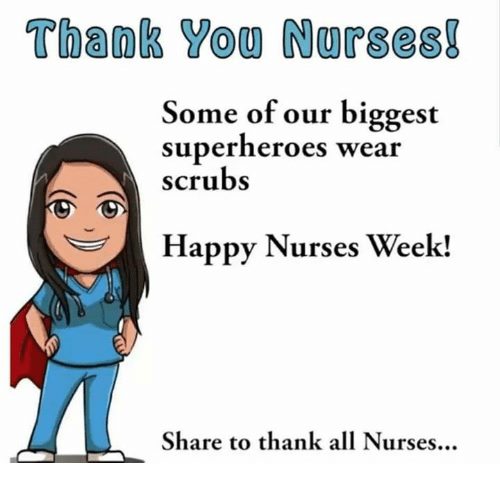
ER nurses week - memes

Image

Happy Nurses Week 2019!

Image
High five a nurse. Give a hug to a nurse you love. Buy some flowers, or some beer.....

Growing Violence in the ER (and other nursing departments)

Have you noticed a growing level of violence in the workplace? In your situation, career, and workplace what are some of the primary causes of violence? Some of the top factors include: A rise in the opioid epidemic and violent patients.  Coworker or manager violence, be it bullying or verbal. Dementia or mental health patients. What do you commonly see your workplace?

Resources for Transitioning from Student to Practitioner

Some of the most daunting moments in a nursing career is when you started a new position. The most stressful may be when starting a brand new career. Nursing students who make the shift to practitioner face numerous insecurities and steep learning curves particularly around competency. Knowing what assessment to make and having confidence in that result are things only experience can help with. No amount of book study or internship will qualify you when you're out caring for patients on your own. Here are some basic resources, albeit heavier reading, on areas to watch out for and ways to succeed, when starting a new role as a nurse. Best practice principles for the transition from student to registered nurse -  https://www.collegianjournal.com/article/S1322-7696(08)60073-6/pdf A Process of Becoming: The Stages of New Nursing Graduate -  http://nursingthefuture.ca/assets/Documents/Stages2008.pdf Work Unit Transformation To Welcome New Graduate Nurses: Using Nurses’ Wisd...